The Three Core Roles in Drafting and Design

Updated: Jun 8
Understanding Client, Drafter & Designer, and Builder Responsibility
1. Client Responsibility: Vision with Accountability
The client is more than just the origin of ideas—they are the driver of direction and approvals.

Core Responsibilities:
Provide clear inputs, inspiration, and expectations
Define design features and functional needs
Conduct thorough design reviews
Deliver timely decisions and approvals
Ensure alignment between goals, budget, and scope
Industry Insight:
Clients are ultimately responsible for ensuring the project is properly coordinated and supported with accurate information. Delays or unclear direction from the client often ripple through the entire project lifecycle.
2. Drafting & Design Responsibility: Translating Vision into Reality
Designers sit at the intersection of creativity and practicality. Their job is not just to draw—but to think critically and anticipate problems.
Core Responsibilities:
Review and fully understand client needs and intent
Translate ideas into accurate, buildable designs
Incorporate features and functional requirements
Identify and communicate design conflicts or risks early
Ensure technical accuracy and compliance
Deliver drawings and revisions on schedule
Industry Insight:
Designers are responsible for ensuring that plans are not only visually accurate but also safe, feasible, and aligned with real-world constraints. Early problem detection is one of their most valuable contributions.
3. Builder Responsibility: Execution with Oversight
Builders are often seen as executors—but in reality, they are also validators of the design.
Core Responsibilities:
Review drawings thoroughly before construction
Communicate constructability issues or discrepancies
Build according to approved and updated plans
Maintain quality and timeline expectations
Industry Insight:
Builders serve as a critical checkpoint. Industry best practices emphasize that contractors should flag issues before building begins, not after problems arise in the field.
Case Studies in Responsibility
Case Study 1: The Cost of Delayed Decisions

Scenario: A client provides initial design direction but delays reviewing updates and approvals.
The client fails to respond in a timely manner.
The designer completes drawings but must pause repeatedly.
The builder cannot proceed due to incomplete approvals.
Outcome:
Project delays
Increased costs
Frustration across all parties
Key Lesson:
Timely decision-making is not optional—it is a core client responsibility. Even the most efficient teams cannot compensate for delayed approvals.
Case Study 2: From Inspiration to Execution
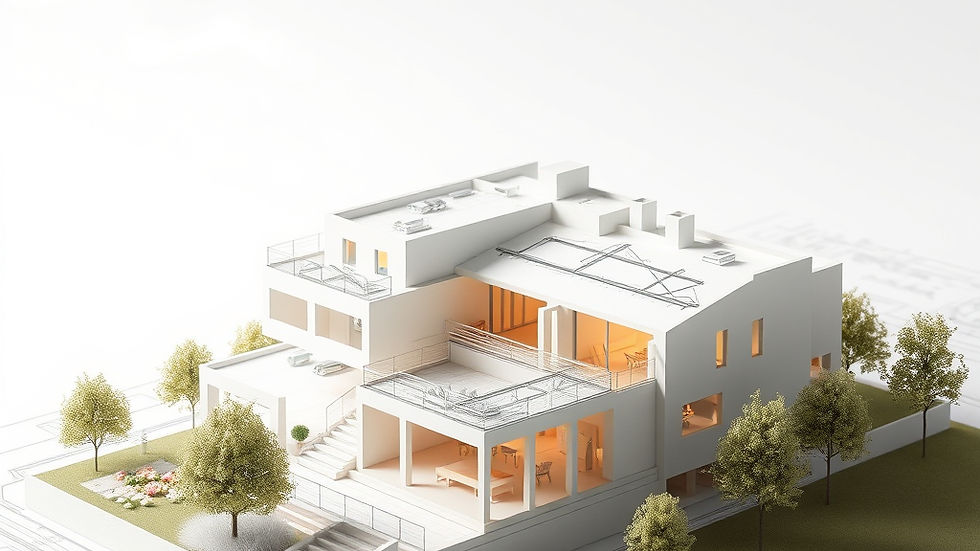
Scenario: A client submits inspiration images and ideas for a custom project.
The client clearly communicates vision and desired features.
The drafter/designer creates a proposal, identifies potential issues, and refines the concept into accurate drawings.
The builder reviews plans, communicates concerns, and constructs the final product using updated revisions.
Outcome:
Smooth workflow
Minimal rework
Final product aligns with original vision
Key Lesson:
When all parties communicate effectively and fulfill their roles, the process becomes predictable, efficient, and successful.
Case Study 3: Scope Creep and Communication Breakdown

Scenario: A project begins with approved plans but evolves without structured updates.
The client continues adding new features after approvals.
The designer revises drawings but does not consistently track or communicate changes.
The builder receives multiple versions of plans and proceeds with outdated information.
Outcome:
Rework and wasted materials
Budget overruns
Misalignment between design and construction
Key Lesson:
Every project needs:
A clear change management process
Documented revisions
A single, current source of truth for drawings
Case Study 4: Compliance and Constructability Failure
Scenario: A client requests a complex feature that pushes structural or regulatory limits.
The client insists on a specific design outcome.
The designer incorporates it without fully validating feasibility.
The builder follows plans but encounters issues during construction or inspection.
Outcome:
Redesign during construction
Increased costs and delays
Potential safety or compliance risks
Key Lesson:
Design must be more than visually appealing—it must be compliant, safe, and buildable. Responsibility is shared, but designers and builders must act as critical checkpoints, not passive participants.
The Common Thread: Collaboration and Accountability
Across all case studies and industry standards, one principle stands out:
Clear roles + consistent communication = successful projects
Breakdowns occur when:
Clients delay or change direction without structure.
Designers fail to communicate risks or document revisions.
Builders proceed without verifying plans.
Success happens when:
Clients are clear and responsive.
Designers are proactive and precise.
Builders are diligent and communicative.
Final Thoughts on Drafting and Design Responsibilities
Drafting and design is not a linear process—nor is the responsibility, but it’s a collaborative system. Each role depends on the others, and no single party can carry the project alone.
The most successful projects are not just well-designed or well-built—they are well-coordinated.
When responsibility is understood, communication is prioritized, and accountability is shared, the result is more than a finished product—it’s a process that is efficient, professional, and repeatable.
In the end, I believe that embracing these principles will help us all achieve our goals in the AEC industry. By focusing on clarity, accountability, and communication, we can ensure that every project we undertake is a success.
---wix---


Comments